
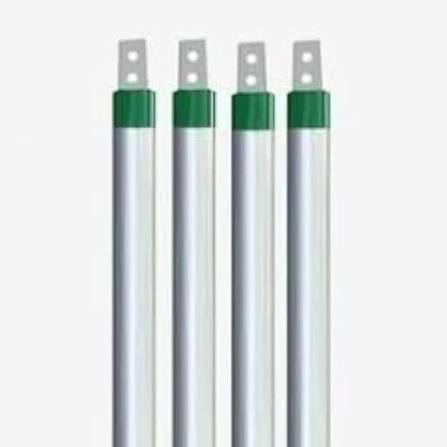
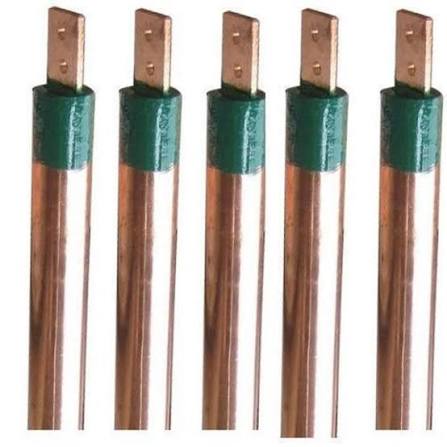
An earthing electrode is a metal conductor (rod, pipe, or plate) buried in the ground to provide a safe, low-resistance path for fault currents, preventing shocks and protecting equipment by dissipating excess electrical energy into the earth, with common types including copper-bonded rods, GI (Galvanized Iron) pipes, and chemical electrodes that use conductive backfill for improved performance and longevity. Key details involve material (copper, GI, or alloy), dimensions (length, diameter), installation depth (reaching moisture), and features like corrosion resistance and chemical compounds for enhanced conductivity.
Types of Earthing ElectrodesRod Electrodes: Solid rods (copper, copper-bonded steel) driven into the ground, simple and effective.Pipe Electrodes: Hollow GI or copper pipes, often perforated, with a spike for driving and a lug for connection.Plate Electrodes: Metal plates (GI, copper) buried horizontally.Chemical Electrodes: Pipes or rods packed with moisture-retaining, conductive chemicals (like salt/calcium chloride mix) for significantly lower resistance and longer life, especially in dry soil.Copper-Bonded Electrodes: Low-carbon steel rods with a thick layer of copper, offering conductivity of copper with the strength of steel. Key Features & SpecificationsMaterial: Copper, Copper-Bonded Steel, Galvanized Iron (GI).Dimensions: Rods: 14.2mm, 17.2mm, 25mm diameter, lengths like 1.2m, 2m; Plates: ~300x300mm, 3-4mm thick.Corrosion Resistance: Crucial for longevity; copper and copper-bonded are superior to plain GI.Resistance: Aim for very low resistance to ensure quick fault current dissipation.Installation: Driven vertically deep enough to reach moist soil; chemical backfill enhances performance. Purpose & BenefitsProtects humans from electric shock and equipment from damage.Dissipates fault, leakage, and lightning currents safely.Stabilizes system voltage and prevents fire hazards.Reduces maintenance through durable designs and chemical enhancement
Hi, this is a comment.
To get started with moderating, editing, and deleting comments, please visit the Comments screen in the dashboard.
Commenter avatars come from Gravatar.